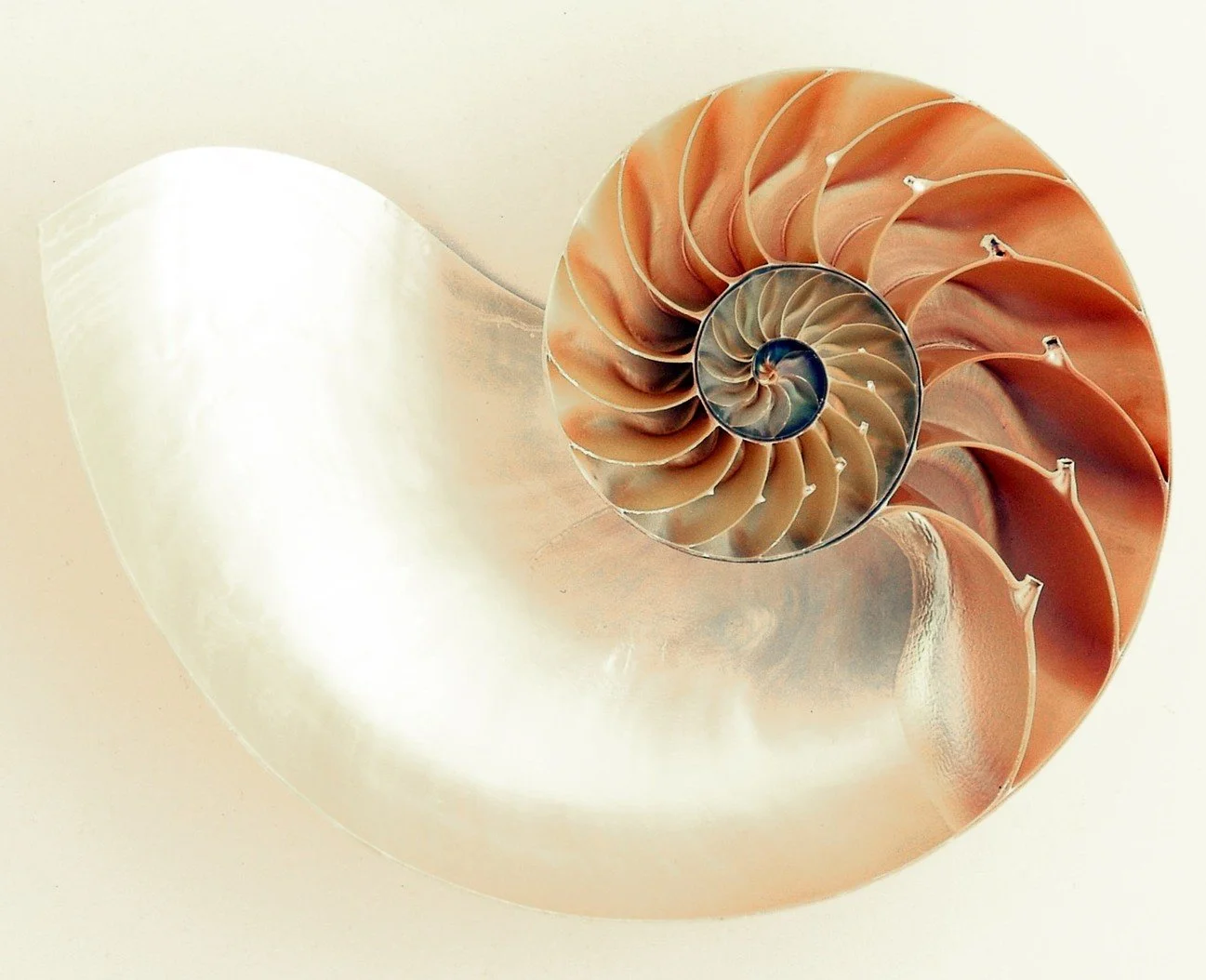
The Spiral of Reclamation™
becoming is a lifelong process—seasons of thresholds and reclamation
We do not become our Self once.
We become our Self over and over again.
Life unfolds through thresholds—moments when an identity, relationship, belief, role, or way of living that once held us no longer fits. Sometimes we choose these thresholds. Sometimes they arrive through loss, betrayal, estrangement, illness, aging, divorce, caregiving, retirement, spiritual awakening, or simply the quiet realization that the life we are living no longer feels entirely our own.
At these thresholds, the question is not simply, “What happens next?”
The deeper question is:
Who am I now?
Who am I now?
The Spiral of Reclamation is a framework for understanding what happens when the identities we have inherited, constructed, or inhabited begin to fracture. It guides us as we are called to reclaim what is authentically ours.
It is a map of becoming.
But unlike a journey toward some final, perfected Self, the Spiral recognizes that becoming is cyclical. We encounter these questions again and again over our lifetime. Each passage brings us into deeper relationship with the Self, with others, with the Living Earth, and with the Sacred—however you understand that.
The destination is not independence.
The destination is kinship.
From the Hero's Journey
to the Spiral of Reclamation
For much of the twentieth century, Joseph Campbell's Hero's Journey provided one of our most influential maps of human transformation. The hero leaves the ordinary world, answers a call to adventure, crosses a threshold, faces trials, undergoes an ordeal, and eventually returns carrying something of value. At its heart, the Hero's Journey asks, “Who can I become?”
Decades later, Maureen Murdock, a student of Campbell’s, developed the Heroine's Journey after recognizing that the Hero’s Journey did not adequately describe many women's psychological and spiritual lives. The Heroine's Journey asks a different question, “What have I forgotten?” Her Heroine's Journey involves separation from the feminine, identification with masculine values, the illusion of success, descent, healing, and ultimately an integration of the masculine and the feminine.
Both maps remain valuable. But I found myself looking for another map. I was interested in what happens when a woman has not primarily separated from the feminine but rather spent decades living inside an inherited cultural architecture of femininity. What happens when she has learned—often from childhood—to organize her identity around being good, working to be attractive, feeling needed, accommodating others, pursuing productivity and success, nurturing others, self-sacrificing, or becoming indispensable? What happens when women build our lives inside that architecture—and then the architecture fails us? Because I was that woman.
And what happens when the task is not to conquer the world or to simply recover the feminine—but to reclaim the Sovereign Self, the Self capable of living in relationship without disappearing inside relationship?
That is the territory of the Spiral of Reclamation, which asks the question:
How do I live in kinship with others, the Living Earth, and the Sacred while fully honoring and living into my Sovereign Self?

The Glass Cradle
For many women, the Spiral begins long before they know they are on it. We are born into cultures, families, religions, communities, and historical moments that begin teaching us what it means to be a woman before we are old enough to question the lesson.
I call this inherited architecture the Glass Cradle.
The Glass Cradle is not simply historical patriarchy, or femininity. It is the mostly-invisible network of expectations, stories, roles, rewards, prohibitions, relationships, and assumptions through which we learn who we are supposed to be as women. Because the cradle is transparent, we may not recognize it as an architecture at all. It can simply feel like reality. But it is a reality to which we neve gave consent, and a reality that harms us.
Some women flourish for a time. Some resist it almost from the beginning. Some move back and forth between accommodation and rebellion. Many spend years trying to succeed within it, often without recognizing the invisible cost. To be clear, the problem is not femininity, and the solution is not the rejection of femininity. Rather, the problem comes when an inherited definition of womanhood becomes confused with our identity at the expense of the Sovereign Self. When that happens, belonging can quietly become conditional. Until, eventually, something happens that makes the bargain impossible to maintain.
The Glass Cradle cracks, or breaks entirely.
Rupture
Sometimes reclamation begins with awakening.
Sometimes it begins with catastrophe.
A marriage ends. A child becomes estranged. A parent dies. A career disappears. The body changes. Caregiving consumes a decade. Retirement removes an identity that once organized daily life. A faith tradition no longer holds. A relationship betrays us. A dream we spent decades pursuing turns out not to be our dream at all.
Or maybe nothing dramatic happens.
We simply hear something inside us whisper, “I cannot keep living this way.”
This is the threshold of rupture.
Rupture can feel like the destruction of identity because, in part, it is. The roles, relationships, beliefs, and structures through which we knew ourselves no longer provide a coherent answer to the question, “Who am I?”
This is why profound transitions can feel so disorienting even when we know intellectually that change is necessary. We have not simply lost something outside ourselves. We have lost a way of knowing ourselves. Yet rupture and reclamation are not the same thing. Rupture opens the door. Reclamation is the work of walking through it.
Seeing the Architecture of Rupture
One of the most important movements in the Spiral is learning to see what was previously invisible. We begin asking different questions.
Which parts of my identity did I consciously choose and which did I inherit?
Who taught me what it meant to be a good woman, mother, daughter, wife, professional, caregiver, spiritual person, or human being?
Where have I confused self-sacrifice with love?
What did belonging require of me?
Where did I adapt to remain loved, safe, approved of, or needed?
Where have I abandoned or betrayed my Self to preserve belonging?
These are not questions designed to assign blame. They are questions that restore choice. We cannot consciously reclaim what we cannot yet see.
Reclamation changes the way we relate. Relationship eventually brings us to another threshold. And the Spiral begins again.
Not because we failed.
Because we are alive.
And because we have a Sovereign Self that longs to be honored.
The Sovereign Self
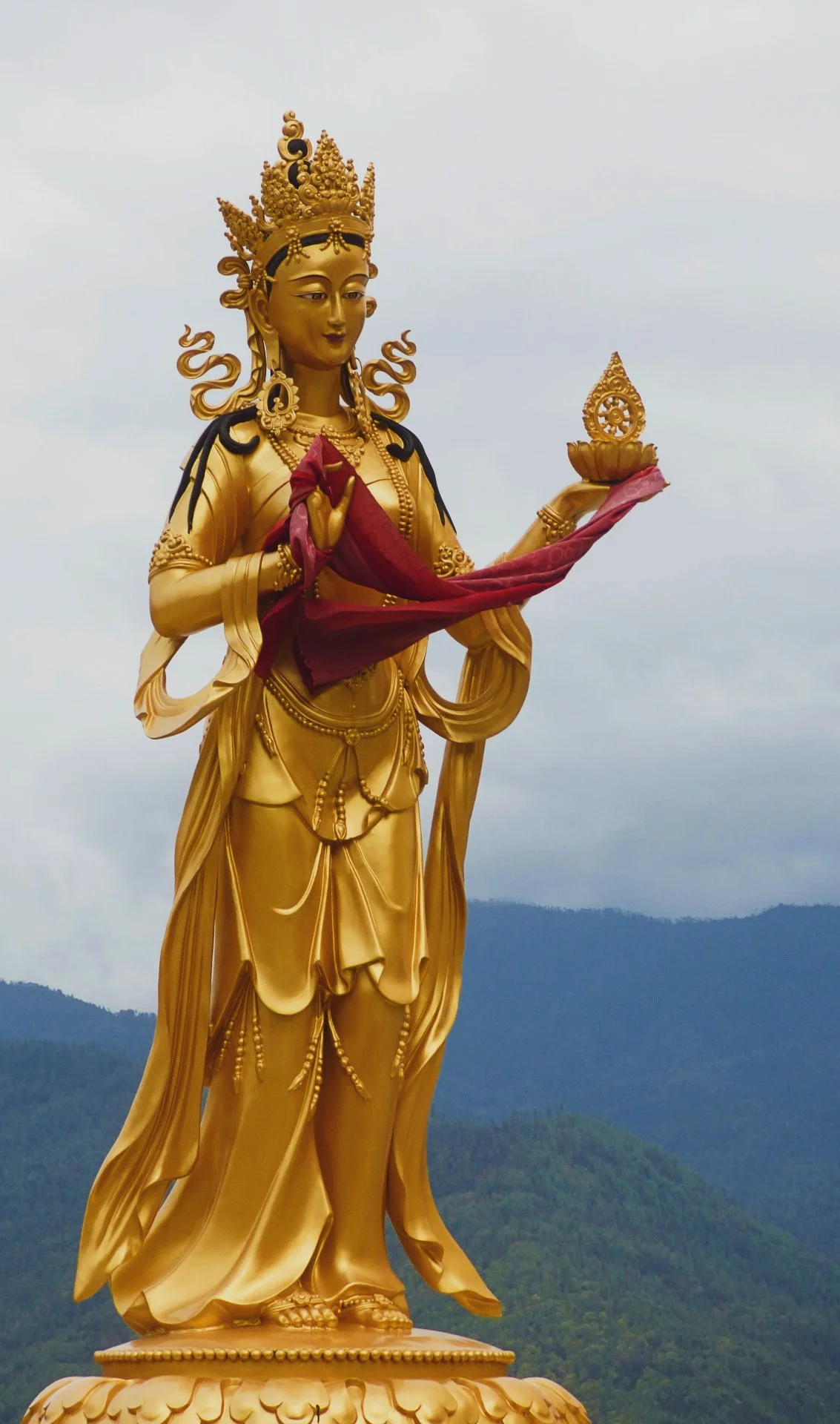
Beneath the identities we inherit and the roles we perform is what I call the Sovereign Self.
Self-sovereignty is sometimes confused with radical independence. “I don’t need anyone. I answer only to myself.” That is not the sovereignty I mean.
The Sovereign Self is the Self who possesses an inner center of gravity.
She can love without disappearing.
She can belong without abandoning herself.
She can care for others without making usefulness the price of her existence.
She can listen to inherited wisdom without surrendering her authority to it.
She can participate in family, community, culture, and tradition while retaining the capacity to discern what is hers and what is not.
Reclamation Requires Grief
Reclamation is often portrayed as liberation where we throw off the old expectations and become who we were always meant to be. This can be exhilarating. But reclamation also involves grief.
We grieve the Self we abandoned.
We grieve choices we made when we did not yet understand that we had choices.
We grieve relationships that cannot accompany us into the next version of our lives.
We grieve years spent trying to earn belonging.
We grieve dreams that belonged to someone we no longer are.
We may even grieve the identities we consciously choose to relinquish.
Because an identity can be constraining and still be beloved. A role can cost us dearly and still have given our lives meaning. Reclamation asks us to hold these complexities without reducing our lives to either victimhood or triumph. We did the best we could with the maps available to us. Until we realized we needed a different map.
The Spiral
The process of reclamation is deliberately a spiral, rather than a ladder or a straight road, because human development rarely happens in clean stages.
We circle back.
A question we thought we answered at forty returns differently at sixty. A boundary we learned to hold with colleagues becomes much harder with an adult child. A grief we thought we had completed opens into another layer. An identity reclaimed after divorce may need to be reclaimed again after retirement. A spiritual awakening may solve one problem while creating entirely new questions.
We return to familiar territory, but we are not standing in precisely the same place. We bring everything we have learned with us. That is the wisdom of the spiral. We become our Self over and over again, through a lifetime of reclamations.
The Movements of Reclamation
Although every woman’s journey is different, the Spiral often moves through recognizable territory:
The Glass Cradle → Rupture or Awakening → Rejection → Witnessing → Seeing → Descent →
Remembering → Grieving → Forgiving → Listening → Reclamation → Kinship
We may begin by living within an inherited identity without fully recognizing it. Something disrupts that identity. We reject a role, expectation, relationship, or story that can no longer contain us.
We gather allies. Sometimes we need a mentor. Sometimes we need community. Almost always, we need someone capable of witnessing who we are becoming rather than insisting that we remain who we have been.
We begin seeing the invisible architecture that shaped us.
We descend into the difficult territory beneath our adaptations.
We confront grief, anger, betrayal, longing, and the ways we may have abandoned ourselves.
We remember the Sovereign Self.
We forgive—not as absolution for harm, but as release from the demand that our past become different before we can live. And eventually, beneath all the noise of who we were supposed to be, we become able to hear another call:
Who am I becoming now?
Then we reclaim the Sovereign Self.
Until life calls us to the threshold and another journey of reclamation begin
Beyond Independence: Living in Kinship
Reclamation is not complete when we become autonomous. This is where the Spiral moves beyond a purely psychological model. A sovereign human being is still a relational human being. We belong to families and communities. We inhabit bodies dependent upon soil, water, air, plants, animals, microbes, and climate. We inherit histories we did not create. We participate in systems larger than ourselves. We encounter mystery. The deepest purpose of reclamation is therefore not to build a stronger fortress around the individual Self.
It is to become capable of kinship without self-erasure.
I understand this as relationship across four dimensions:
Kinship with Self — living from an inner center of authority, integrity, compassion, and aliveness
Kinship with Shared Humanity — loving and belonging with other people without surrendering ourselves in exchange for connection
Kinship with the Living World — remembering that we are not separate observers of nature but participants in a living, reciprocal world
Kinship with the Sacred — restoring relationship with mystery, meaning, spirit, the Holy, the numinous, or whatever name we give to that which exceeds the individual Self
This changes the destination of the transformational journey. The Hero’s Journey asks, “Who can I become?” The Heroine’s Journey asks, “What have I forgotten?” The Spiral of Reclamation asks
How do I live in kinship, remaining fully my Self while participating fully in the web of belonging?
A Journey Shaped for Today’s Historical Moment
Every developmental map emerges from a particular cultural moment. Joseph Campbell was born in 1904. His articulation of the Hero’s Journey emerged from a generation profoundly shaped by two world wars and cultural narratives of adventure, ordeal, courage, achievement, and return.
Maureen Murdock, born in 1945, developed the Heroine’s Journey in the wake of second wave feminism, as women challenged traditional gender roles and entered institutions historically organized around male lives and masculine definitions of success.
I was born in 1962 at another threshold, the cusp between the boomers and Gen X. Women of my generation inherited contradictory instructions. We absorbed our mothers’ expectations around femininity, motherhood, marriage, caregiving, beauty, and service while simultaneously being told that we could—and should—achieve anything men could achieve. For many women like me, liberation did not eliminate the old architecture. It added another floor.
Be nurturing, but independent.
Be an attentive mother, but build a career.
Care for aging parents, but remain productive.
Be attractive, but don’t appear vain.
Be accomplished, but don’t become threatening.
Be strong, but remain pleasing.
Need no one, but hold everyone together.
The result for many women of my age and younger was not liberation from the Glass Cradle, but over-identification with an increasingly impossible version of womanhood. Younger generations have inherited another dilemma. Some continue trying to succeed within these expectations. Others reject traditional femininity altogether. But rejection alone does not necessarily create an integrated identity.
We know how to conform.
We know how to rebel.
We have fewer maps for what comes after rebellion.
How do we separate without severing? How do we reclaim the Self without romanticizing the past? How do we become into the future without returning to the structures from which we needed to free ourselves? How do we belong without abandoning ourselves? These are questions of reclamation.
A Journey to Your Sacred Feminine
The Spiral of Reclamation is not an argument for returning women to traditional femininity. Nor does it assume there is one essential feminine identity waiting underneath cultural conditioning. That distinction matters. The Glass Cradle describes the ways cultures teach women what femininity is supposed to mean. The Sovereign Self asks something else:
What is true for me?
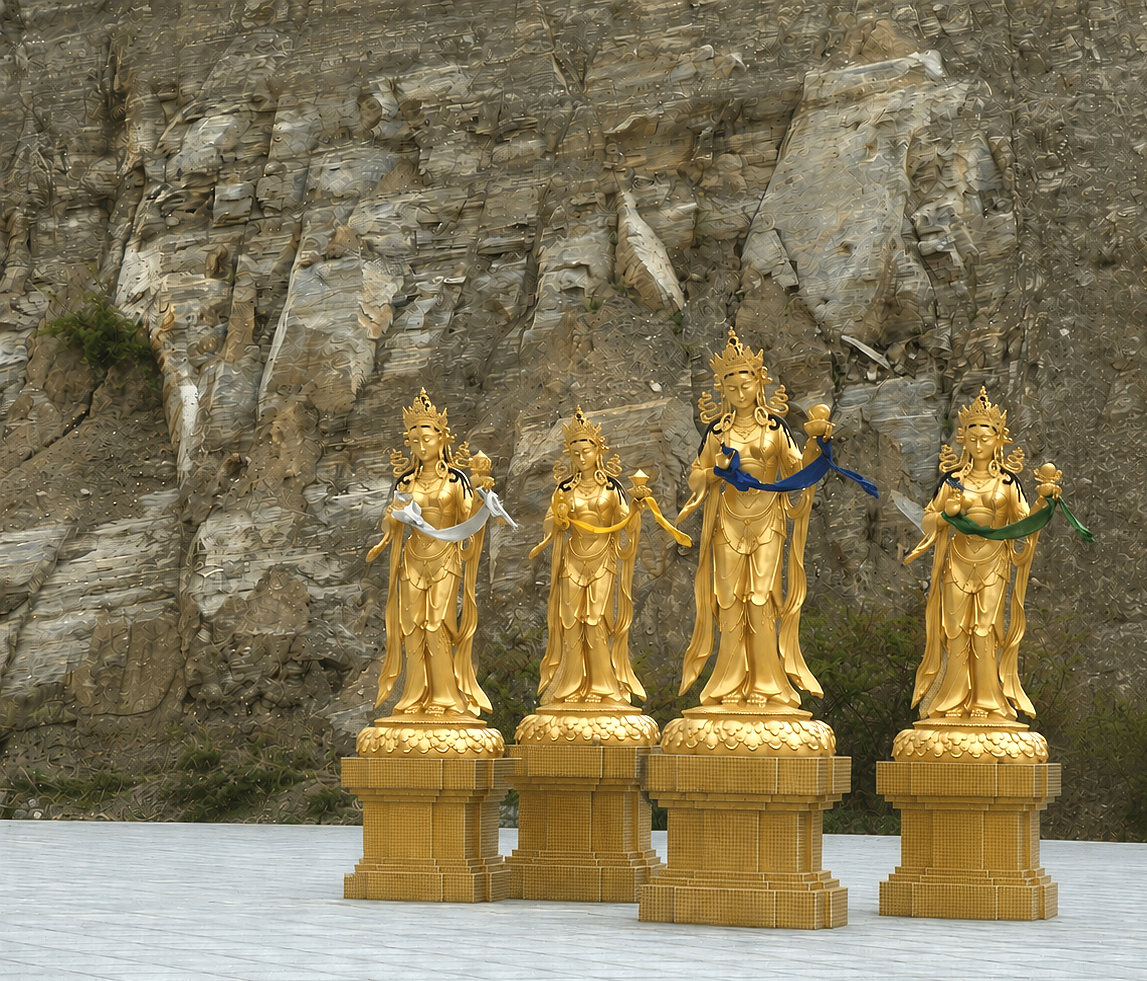
For one woman, reclamation may include motherhood, domesticity, sensuality, nurturing, ritual, softness, or qualities culturally described as feminine. For another, reclamation may involve rejecting many of those things. For most of us, it is far more complicated. The goal is neither obedience to the feminine nor rejection of it. The goal is freedom to discern.
To know what is inherited.
To know what is chosen.
To know what is beloved.
To know what has become a cage.
And to become increasingly capable of choosing a life that is genuinely our own.
Remember. Reclaim. Return.
And from that reclaimed center to live in kinship.